



SynTrac at EASN 2025 in Madrid
SynTrac participated in the EASN Conference 2025, held in Madrid, Spain, with a dedicated project session chaired by the spokesperson Prof. Sabine Langer and co-spokesperson Prof. Stephan Staudacher.
The EASN (European Aeronautics Science Network) Conference is a leading international forum for aeronautics research and innovation in Europe, bringing together academic researchers, industry experts, and policymakers to share advances, discuss emerging technologies, and foster collaboration across the aerospace community.
Prof. Langer opened the session with a compelling overview of the SynTrac project, outlining the project objectives and research approach. This high-level introduction framed the varied set of presentations that followed.
The dedicated SynTrac session provided a dynamic platform to present the project’s interdisciplinary work, showcasing a diverse mix of technical presentations spanning multiple topics and disciplines. Contributions ranged from extending engine performance modelling for highly integrated transport aircraft as well as modeling the acoustic chain from source to immission, to engine–airframe integration using numerical approaches as well as off-design assessment in preliminary aircraft design using actual operational data. The presentations showcased SynTrac’s ability to link fundamental research with applied engineering challenges.
Beyond technical topics, the session includes presentation by the supporting project structures such as the Public Relations project and the integrated Research Training Group, offering insights into the project’s culture and everyday research life. By combining in-depth technical exchange with broader perspectives on collaboration and outreach, SynTrac’s session stood out from typical conference sessions and attracted a diverse audience.
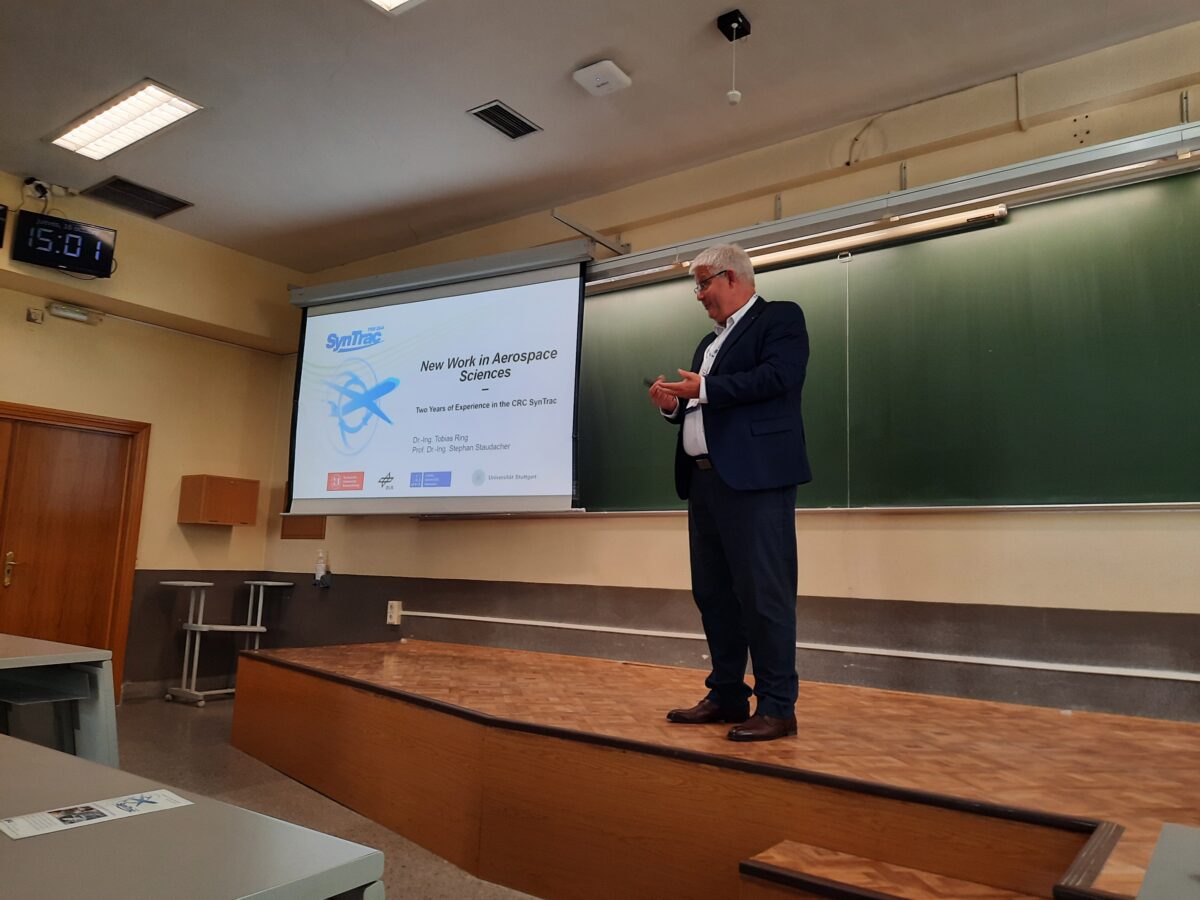
Photo: SynTrac
By offering this multi-faceted dialogue, which combined in-depth technical exchange with broader perspectives on collaboration, project culture, and outreach, SynTrac’s session fostered meaningful engagement with the international aerospace research community and highlighted the project’s distinctive approach to interdisciplinary collaboration.

