

SynTrac Strengthens International Collaboration in Aerodynamic Analysis
As part of SynTrac Project A02, “Simulation of Aircraft Flow Losses,” Myles Zabel recently visited ISAE-SUPAERO in Toulouse, France, to participate in the course “Analyse aérodynamique basée sur l’exergie” (Exergy-Based Aerodynamic Analysis) by Miguel Aguirre. The course was organized within the framework of ISAE Mobility Week and brought together students from across the ISAE Group to explore advanced approaches to aerodynamic performance assessment.
A central focus of the course was the application of modern exergy-based methods for aerodynamic analysis. Participants gained insights into the theoretical foundations of these approaches while also working hands-on with the open-source post-processing tool EPSILON. By combining lectures, practical exercises, and collaborative discussions, the course provided an excellent opportunity to deepen understanding of innovative methods for evaluating aerodynamic losses and aircraft efficiency.
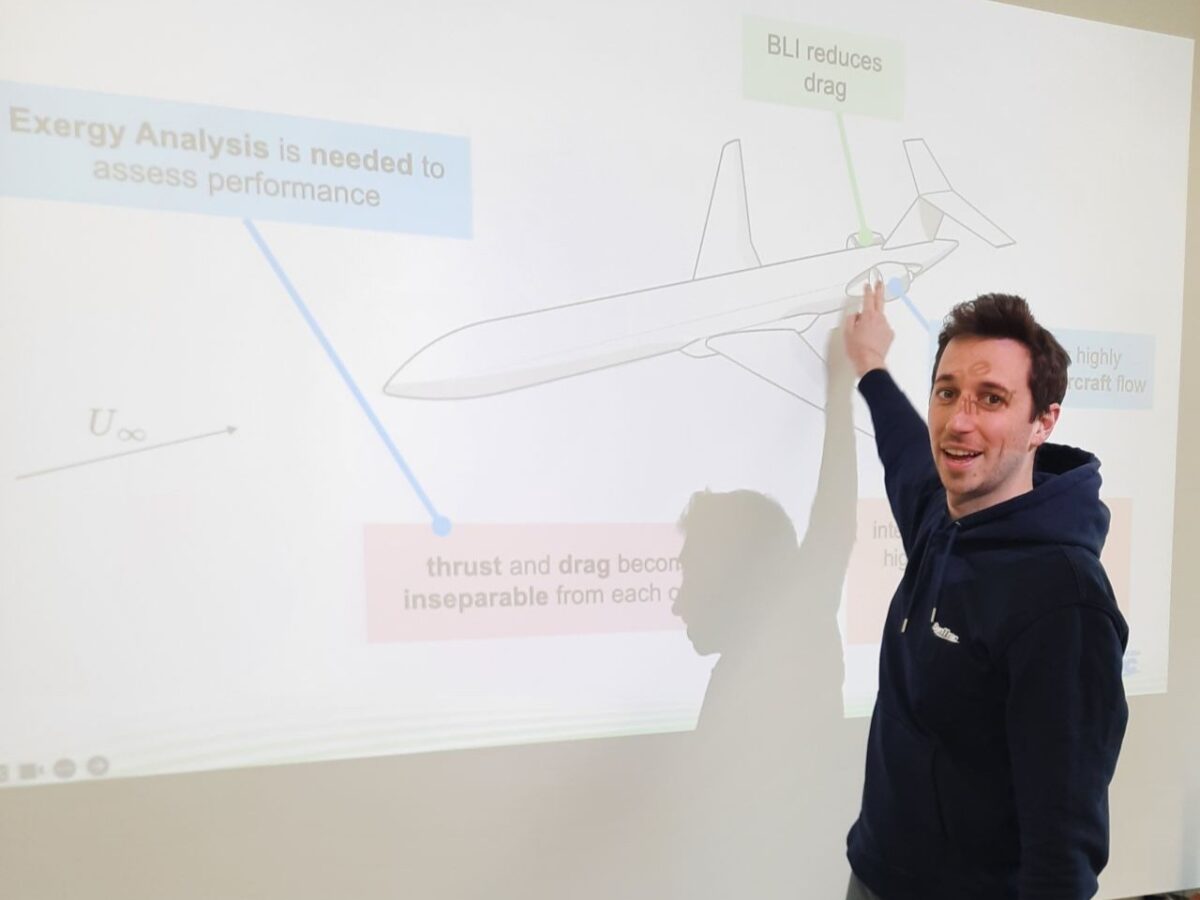
Photo: SynTrac
During his visit, Myles Zabel had the opportunity to present the SynTrac research programme and introduced the objectives of Project A02 to fellow participants and researchers. The presentation highlighted SynTrac’s work on understanding and simulating aircraft flow losses, an important aspect of developing highly integrated and energy-efficient aircraft concepts for future sustainable aviation. The exchange generated valuable discussions and provided opportunities to share perspectives on current challenges and emerging research directions in aerodynamic analysis.
The visit also further strengthened SynTrac’s ongoing collaboration with the research group of Prof. Sébastien Duplaa at ISAE-SUPAERO. This partnership plays an important role in advancing methodologies for the analysis of complex aircraft configurations. Within SynTrac, the EPSILON tool is expected to become a key element in the evaluation of highly integrated aircraft concepts, while Project A02 will actively contribute to the continued development and enhancement of the software.
International exchanges such as this visit are an important part of SynTrac’s research strategy, fostering scientific collaboration, knowledge transfer, and the development of innovative tools and methods. By bringing together expertise from different institutions and disciplines, these activities help advance the understanding of aerodynamic phenomena and support the development of more efficient aircraft for the future.
The successful collaboration has also contributed to attracting young researchers: two students from the ISAE-SUPAERO network are now undertaking internships with SynTrac partner institutions at DLR and the University of Stuttgart. This highlights the value of international exchange not only for advancing research but also for fostering the next generation of scientists and engineers.
SynTrac looks forward to continuing its successful collaboration with ISAE-SUPAERO and exploring new opportunities for joint research in aerodynamic analysis and sustainable aviation technologies.

