Acoustics is the science of sound. It studies the generation, propagation and perception of sound waves in various media. Through its analysis and control, it optimizes acoustic properties in rooms, reduces noise in machines and vehicles, and improves sound quality in audio technology. Applications include building acoustics, noise control and sound measurement technology. In SynTrac…. an example of this is the consideration of the balance between the efficiency of the new SynTrac technologies and the associated noise generation in the cabin and the environment. Optimizing this contributes significantly to the social acceptance of the proposed solutions.
B05
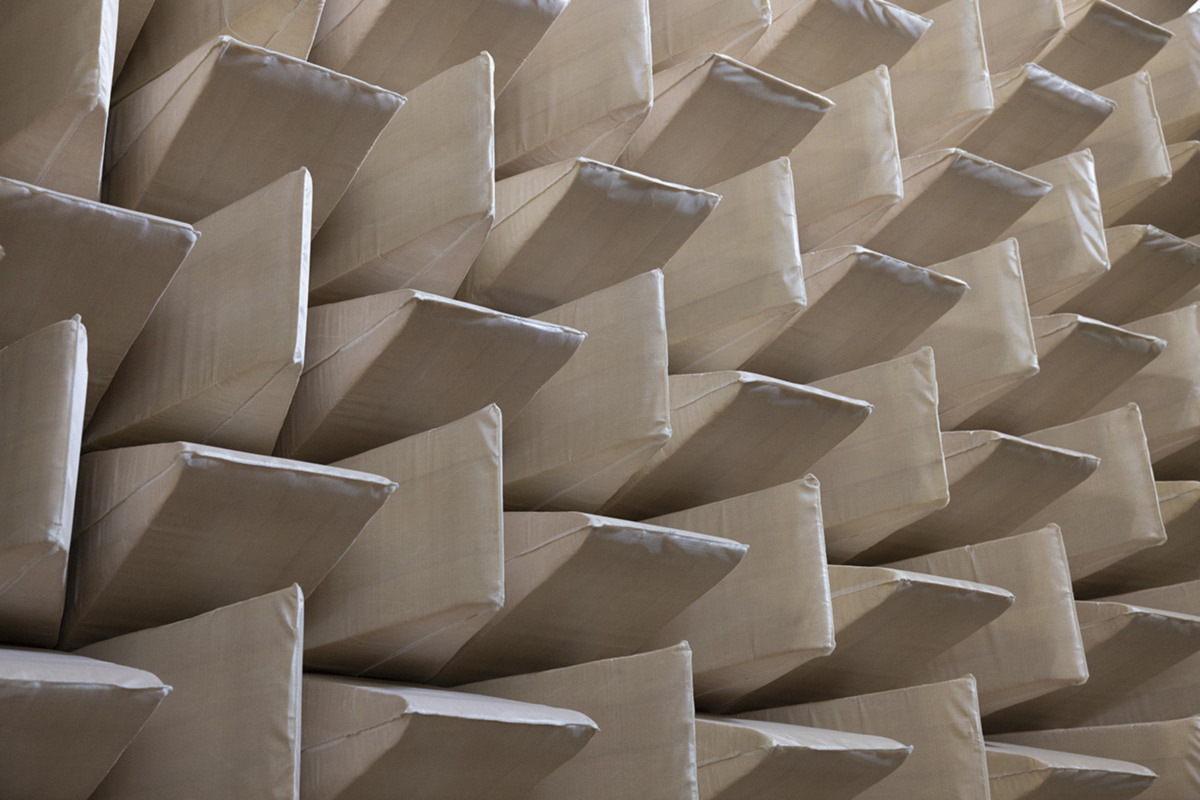
B05: Cabin noise of integrated and distributed propulsion
Bringing acoustics into the preliminary design process to ensure a comprehensive assessment, is one of the major objective of the project. The effect of highly integrated transport aircraft on cabin noise is investigated. In the examinations, a clear focus is put on SynTrac’s mission of a cross-disciplinary, cross-system integration. The sound fields are made accessible in early design phases through appropriate mid-fidelity models of the entire aircraft. For this purpose, a configuration-specific selection of required modelling aspects as well as a design-loop-appropriate numerical solution are investigated. The novel concept require specific reductions of wave-resolving, high-fidelity FE computations.
C04
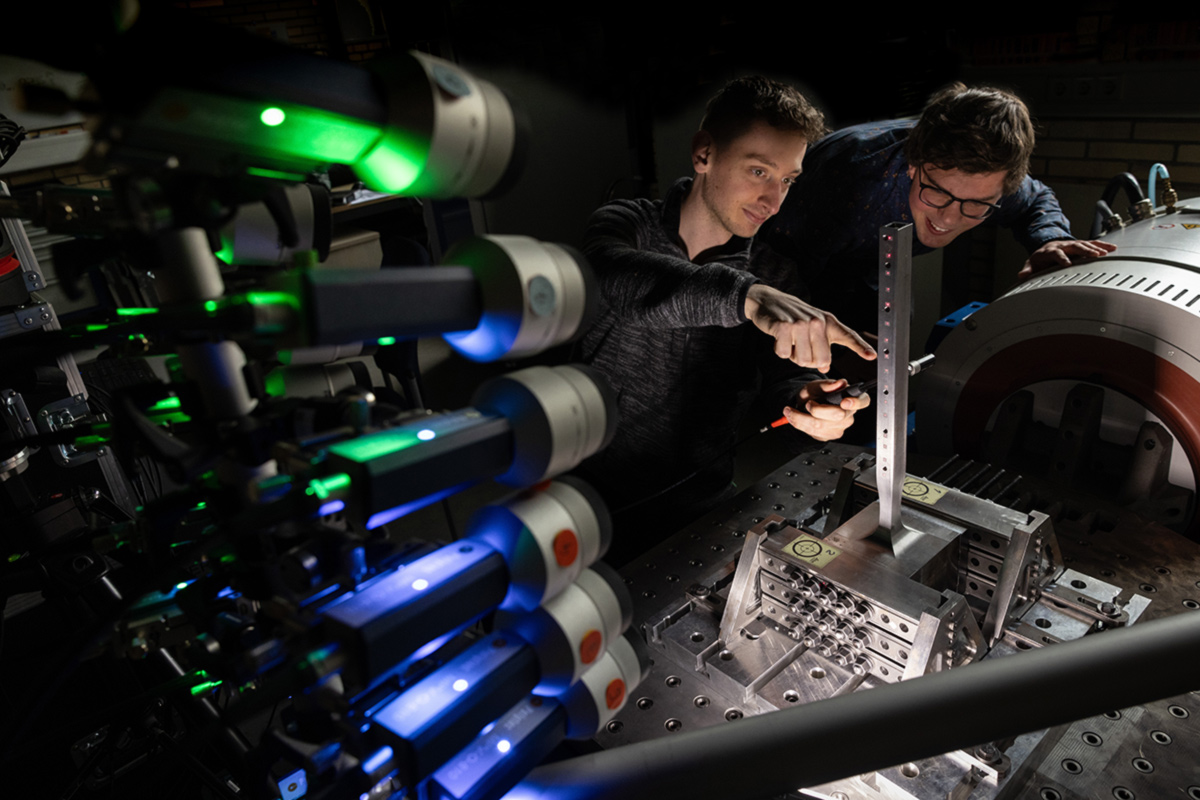
C04: Vibration and vibroacoustic design for future integrated propulsion systems
In the project C04, the development of an efficient, accurate and predictive simulation method, which allows the detailed investigation of the effect of structural nonlinearity sources on cabin noise in future highly integrated aircraft is pursued. The structural transfer paths of vibration and noise in aircraft consist of many components, which are mechanically connected via e.g. rivets and bolts. Such mechanical joints are known to introduce significant vibration-amplitude-dependence of effective stiffness and damping at component interfaces, especially under increased vibratory response ranges of future aircraft designs. The Harmonic Balance method is capable of providing predictions for such cases but is computationally costly when used for acoustic purposes. To account for these challenges, a computational method combining the Harmonic Balance Method with ideas from Multi-Fidelity modelling is developed that is particularly suitable for predicting acoustic quantities.
C05
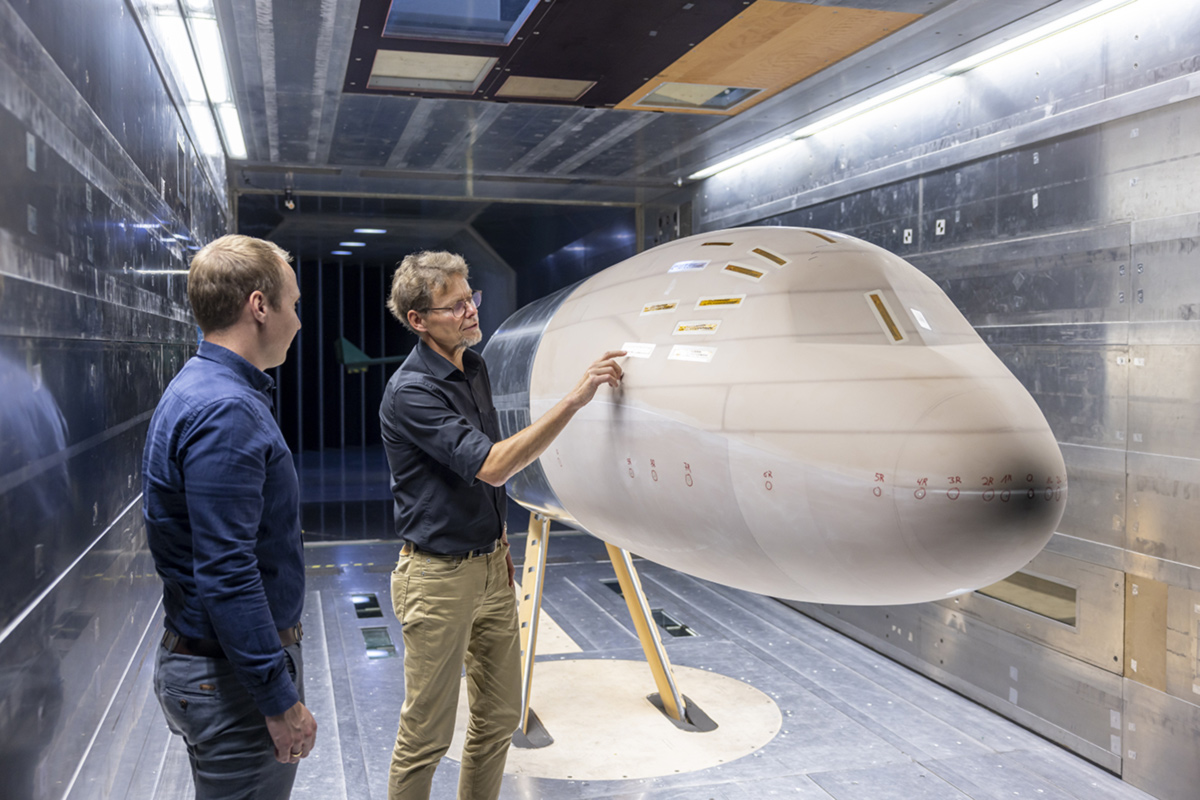
C05: Excitation of aircraft cabin noise by tightly integrated propulsion systems
Project C05 predicts the acoustic fuselage surface pressure fluctuations, generated by a complex, thrust vectoring propulsor. Configurations with podded and tightly integrated engines will be considered. Furthermore, the acoustic relevance of morphing techniques regarding nozzle and rear fuselage deformation is investigated. These pressure data are coupled via an interface to a structural code to analyse the cabin excitation. To capture all source mechanisms the highly efficient Tam & Auriault source model concept is generalized, to enable accelerations by installation and thrust vectoring, and interaction of the convecting pressure near field with surfaces. This extended approach will be validated by zonal LES simulation.
C06
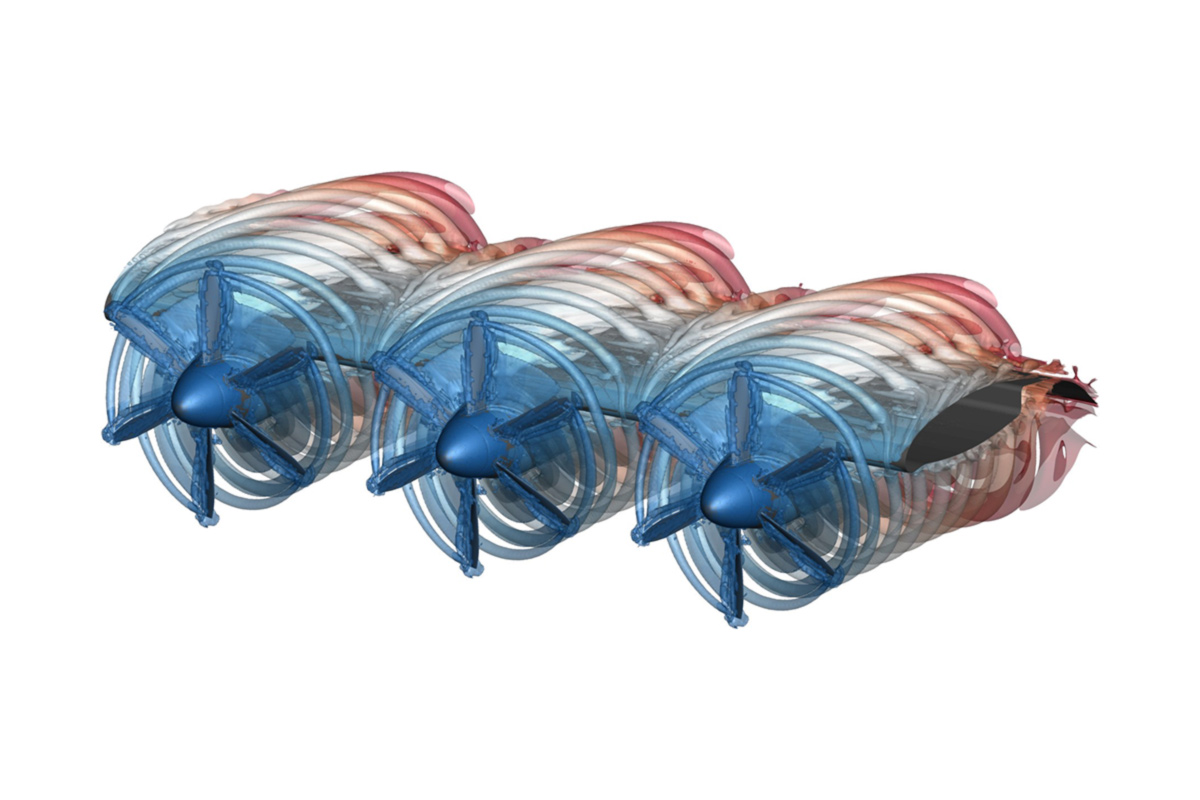
C06: Aeroacoustic aspects of distributed propulsion
To benefit from the efficiency gains of an integrated system design – in this case utilizing distributed propulsion – community acceptance of the technology is paramount. Acoustics and noise are an important driver for this. The goal of C06 is thus to allow an accurate prediction of the main parameter dependencies of sound generation and propagation and further on to integrate acoustics into the design optimization loop for the full aircraft.