





Visitors from KITA Steppkes asks: How do airplanes fly?
In March 2026, curious visitors joined the SynTrac researchers at the Institute of Thermodynamics at the University of Stuttgart: a total of 11 children, aged five to six, from Kita Steppkes came to SynTrac to learn more about airplanes and flying.
Reaching young people is a key priority as part of SynTracs outreach activities. It is therefore especially encouraging that the daycare center is visiting with a group for the third time, a sign of lasting interest and successful early engagement.
At the beginning of this visit, the children shared their own experiences with flying. Some had already traveled on an airplane and talked about it enthusiastically, while others asked many curious questions: Why can airplanes fly? How do they stay in the air?
To make sure everyone could participate and try things out themselves, the children were divided into two groups and guided through the program.
Together we talked about the human dream of flying and how research and engineering have helped turn this dream into reality. We also discussed the role research plays today in making aviation more environmentally friendly and sustainable.
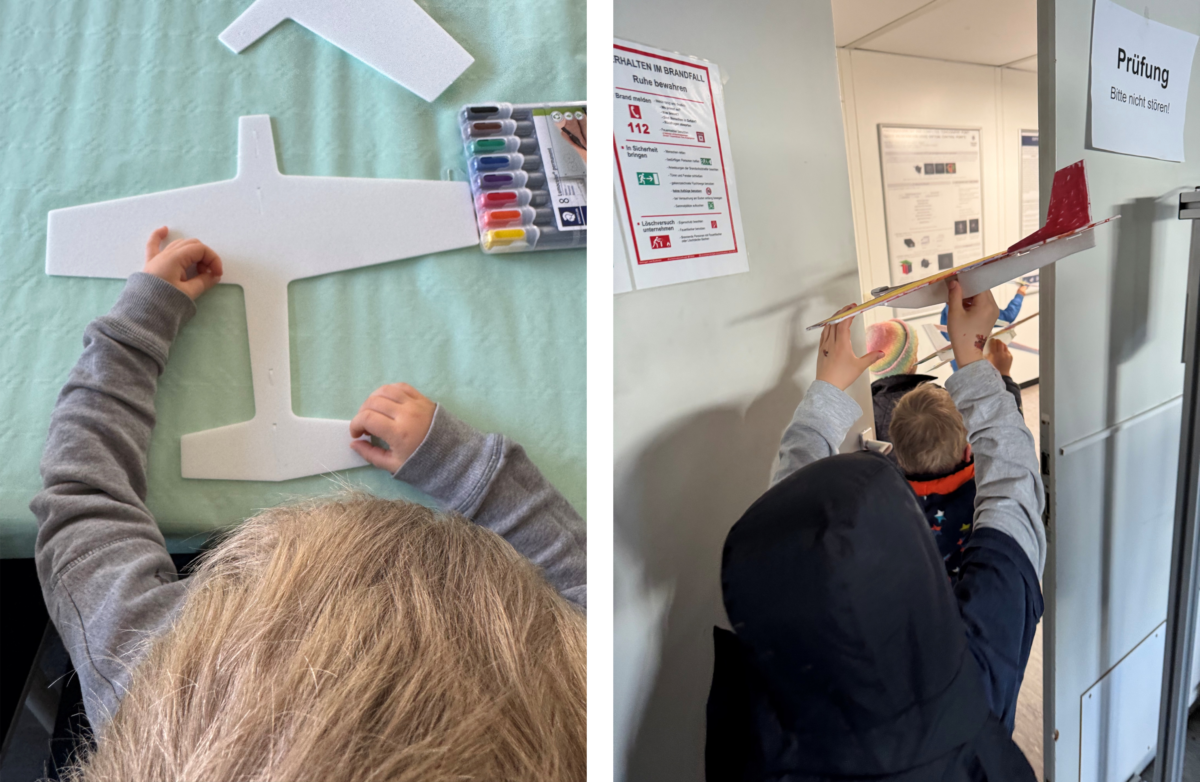
Of course, the visit was not just about listening but there was also plenty of hands-on activity. The children built their own gliders, decorated them with colorful designs, and then tested how well they could fly. It quickly became clear that while a glider can glide for a short distance, an airplane needs propulsion to travel long distances.
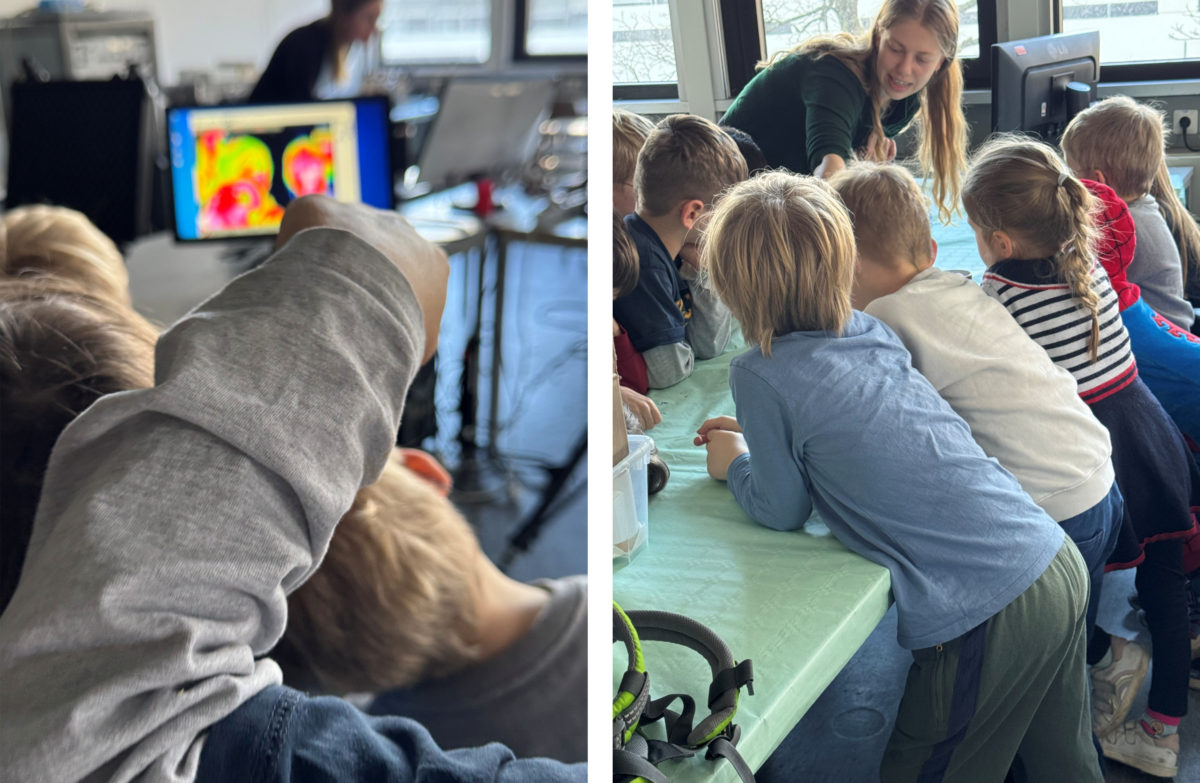
Building on this, we took a closer look at aircraft engines, the exhaust gases they produce, and the very high temperatures inside an engine. To demonstrate how researchers measure such heat, the children were able to try out a piece of research equipment themselves: a thermal imaging camera. Together, they explored what the camera can and cannot detect: Which objects appear clearly in a thermal image? Can you see through materials? And what does a person look like in a thermal image?
Finally, the children conducted their own small experiment. They decorated cups that were then sprayed with a temperature-sensitive coating of thermochromic liquid crystals. Their artwork becomes visible only when a warm drink is poured into the cup.
The visit was great fun for everyone and perhaps it sparked an early interest in science and engineering for some of the young visitors.
Photos: KITA Steppkes

