

SynTrac was successfully represented at DLRK 2026
The 75th German Aerospace Congress (DLRK 2026) brought together around 1,150 experts from academia, industry, and institutions in Aachen from September 8 to 10. The record attendance on the occasion of the congress’s 75th anniversary highlighted its importance as a central platform for scientific exchange on current developments and future perspectives in aerospace. Across around 450 presentations and 70 poster contributions, key topics included sustainable aviation, unmanned aerial systems, artificial intelligence, and new technologies for aviation and space.
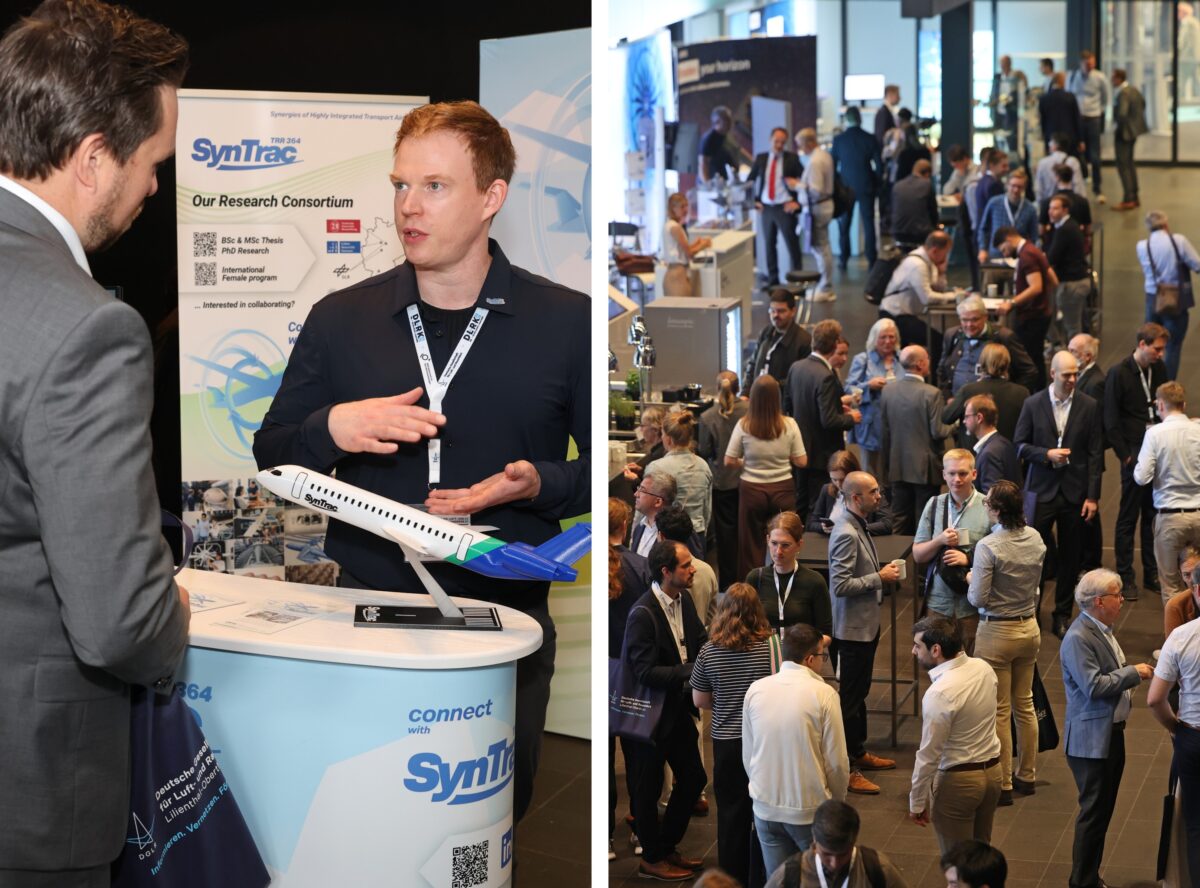
SynTrac used this opportunity successfully to present its research to the scientific community through presentations and posters. At the same time, the project was represented with a booth in the general congress exhibition area, creating additional opportunities for in-person meetings and scientific exchange.
Several scientific contributions by SynTrac at DLRK 2026 presented its current research into new concepts for highly integrated transport aircraft. Presentations given at DLRK 2026 highlighted research results from different areas of the project, which jointly contribute to the development of more efficient propulsion concepts.
Philipp Heinrich (TU Braunschweig) presented work on the functional integration of pressure-actuated cellular structures for morphing nozzles in ultra-high bypass ratio turbofans and Niko Konrad (University of Stuttgart) showed experimental investigations into the development of velocity fields in a propeller wake.
Furthermore, Maximilian Friedrichs-Dachale (TU Braunschweig) introduced a scale-bridging analysis framework for an aircraft rear fuselage structure with integrated engines and Manuel Zeitler (TU Braunschweig) presented design-driven distortion control strategies for boundary layer ingestion intakes.
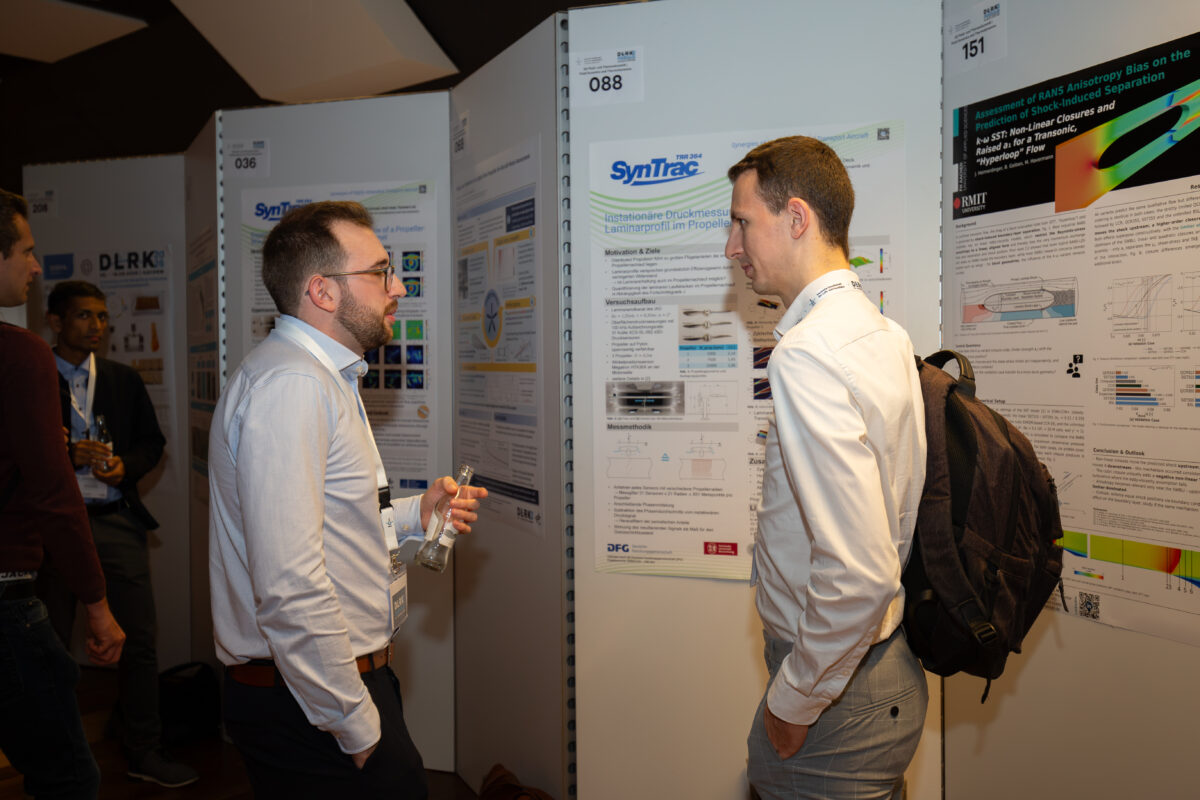
The presentations were complemented by SynTrac contributions to the poster sessions at the DLRK. The thematic scope of the contributions showcased the integrated interdisciplinary approach at the heart of the SynTrac project, recognizing that modern aircraft are not developed within a single discipline, but through the close collaboration of numerous specialized fields.
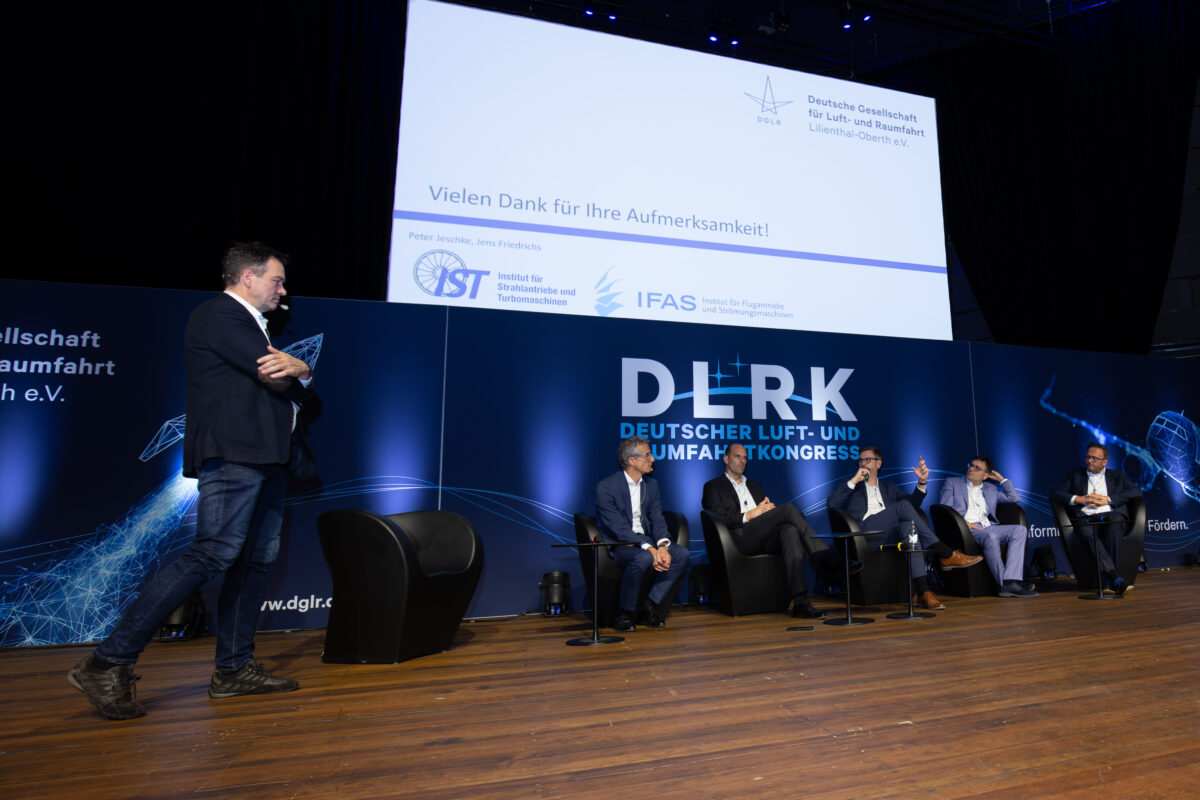
In addition to the technical presentations, SynTrac Principal Investigator Jens Friedrichs (TU Braunschweig) joined Peter Jeschke from RWTH Aachen University for the discussion “Aircraft Propulsion – Quo Vadis” during which they highlighted the importance of joint-up approaches – such as SynTrac – to developing future technologies.
Through its active participation, SynTrac was proud to contributed to this successful event, which continues to provide an excellent platform for the exchange of knowledge, expertise, and perspectives.
Credit for all DLRK2026 Photos in this news item: © DGLR/Andreas Steindl

